Eight scenes, four episodes, one identity
A cinematic short where the lead character has to look the same in every shot — and the system delivered, with auto-anchor, drift grading, selective retries, and four animated episodes from the same keyframes.
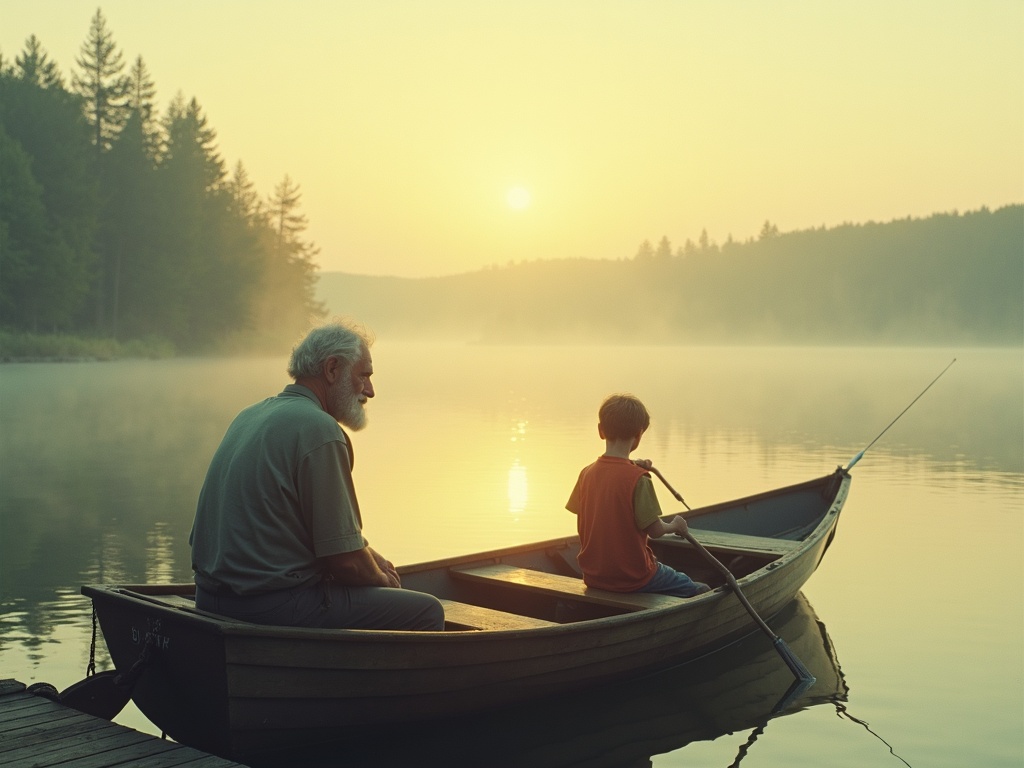
A 70-year-old fisherman named Grandpa Tom takes his 8-year-old grandson Sam on his last sunrise fishing trip. Eight scenes, one boat, two characters that have to look like the same two characters in every shot. This is the failure mode every multi-shot generative tool faces: the marks drift, the wardrobe drifts, the faces drift. By scene 5 you're looking at a different grandfather.
How the system handled identity
The agent submitted eight scenes through generate_project with character_anchor: "auto". That triggered a four-step pipeline server-side:
- Extract anchors from the brief. Gemini Vision (server-side, behind the MCP) parsed the brief and identified two characters + three named props. Latency: 11.0 s.
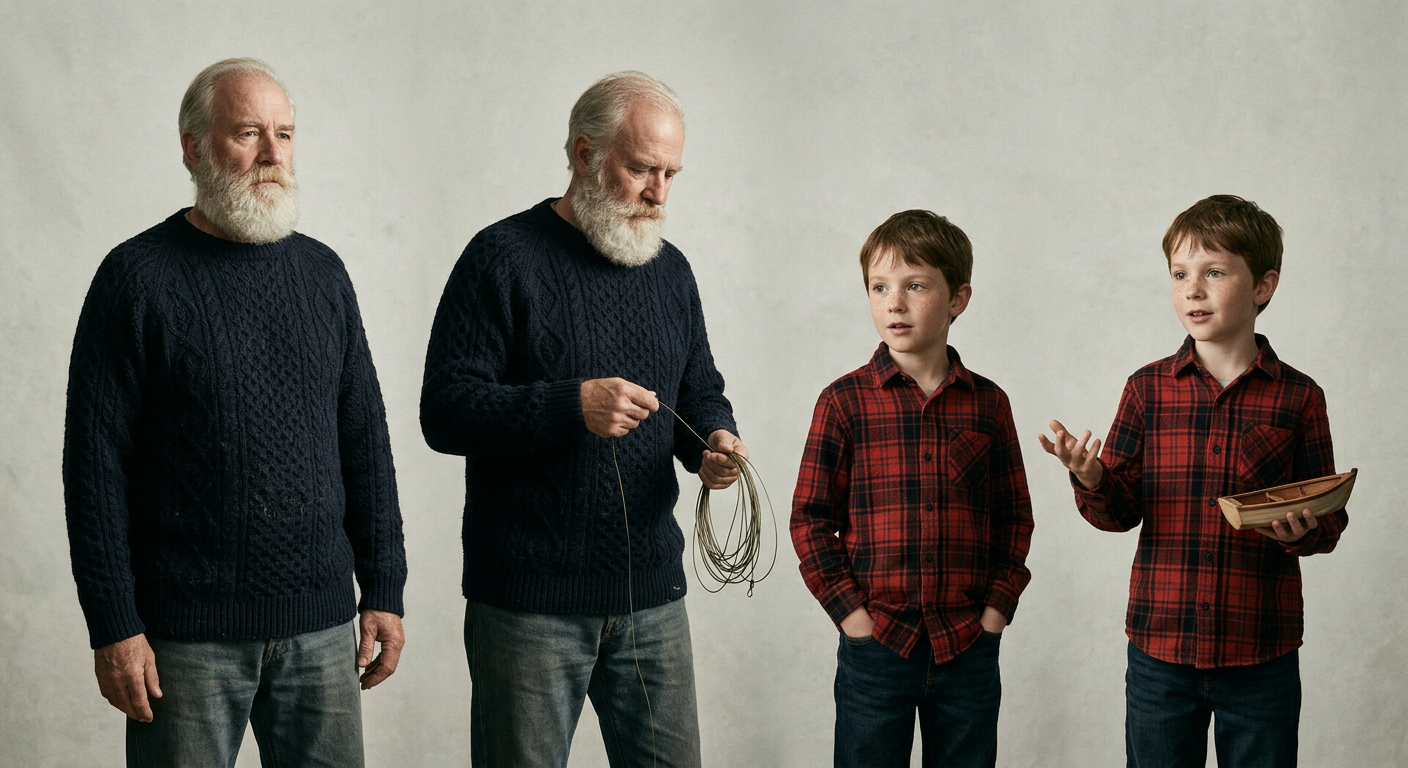
- Generate an anchor sheet.
nano-bananaproduced one image showing both characters in neutral poses — the canonical reference the rest of the pipeline grades against. Latency: 13.2 s. View the anchor sheet. - Fan out 8 scenes in parallel with the anchor URL injected as
source_url. Each scene rendered throughflux-dev. Wall clock per scene: 7.8 – 21.2 s. - Drift-grade every scene via Gemini Vision against the anchor. When the weighted score (
face0.4 +marks0.4 +wardrobe0.1 +palette0.1) fell below 0.70, the worker retried the scene with stronger anchor language. Budget: 5 retries total.
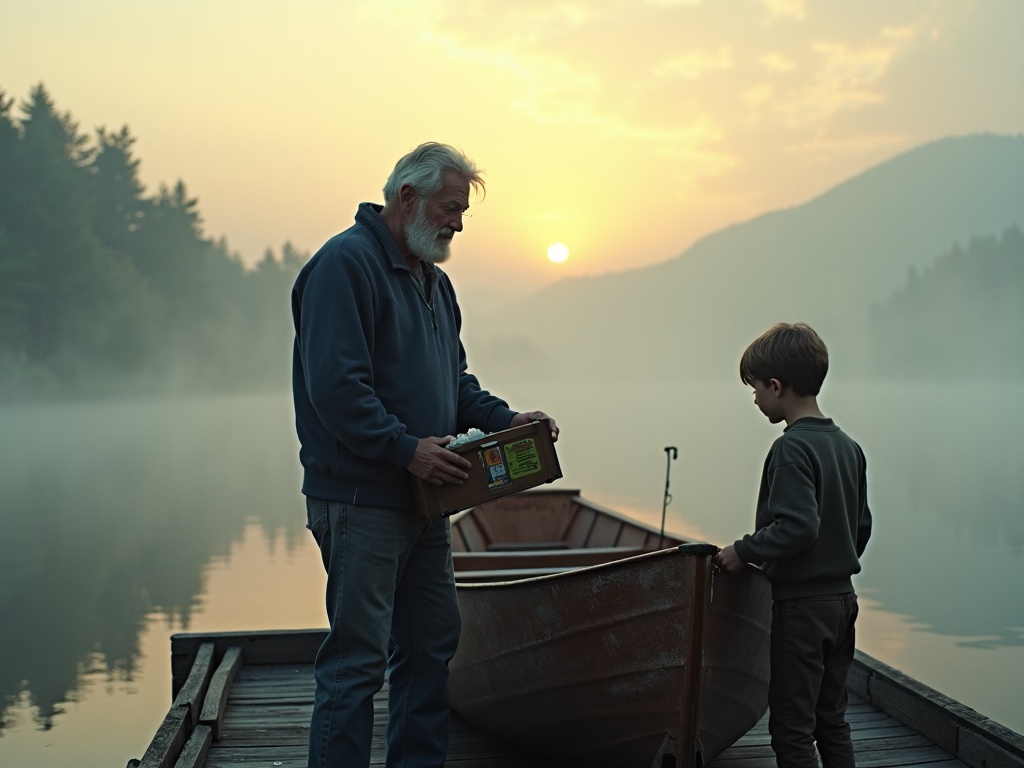
The actual eight scenes
Viewer URL the director can share: storyboard.daydream.monster/v/proj_3a433187c484
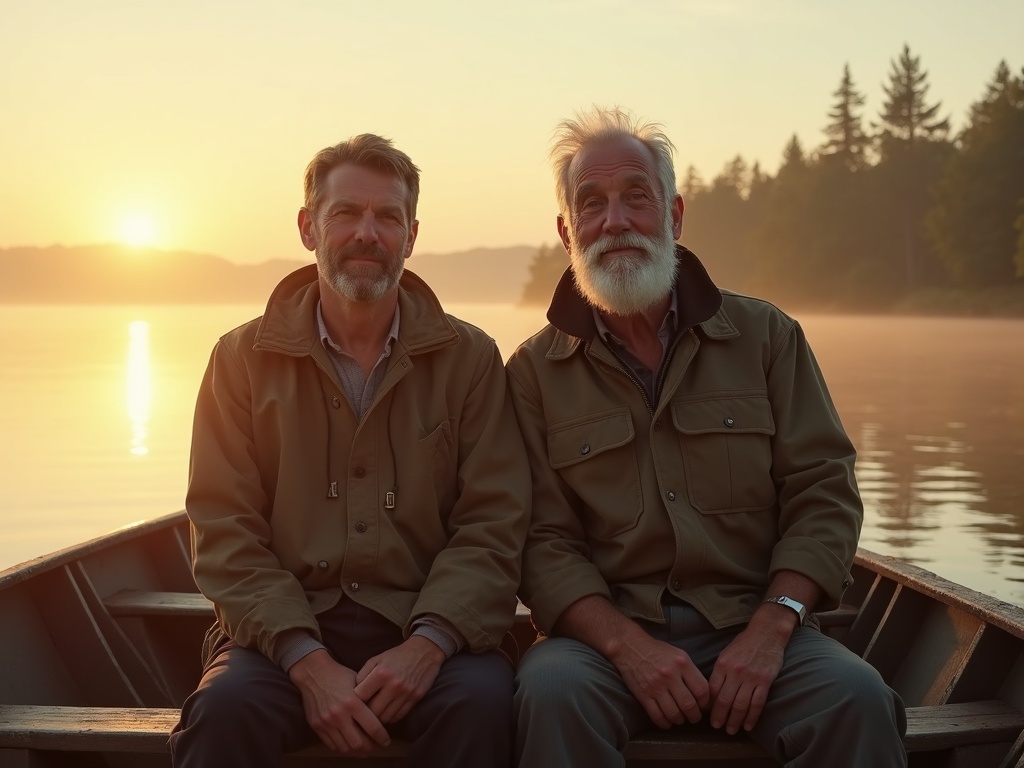
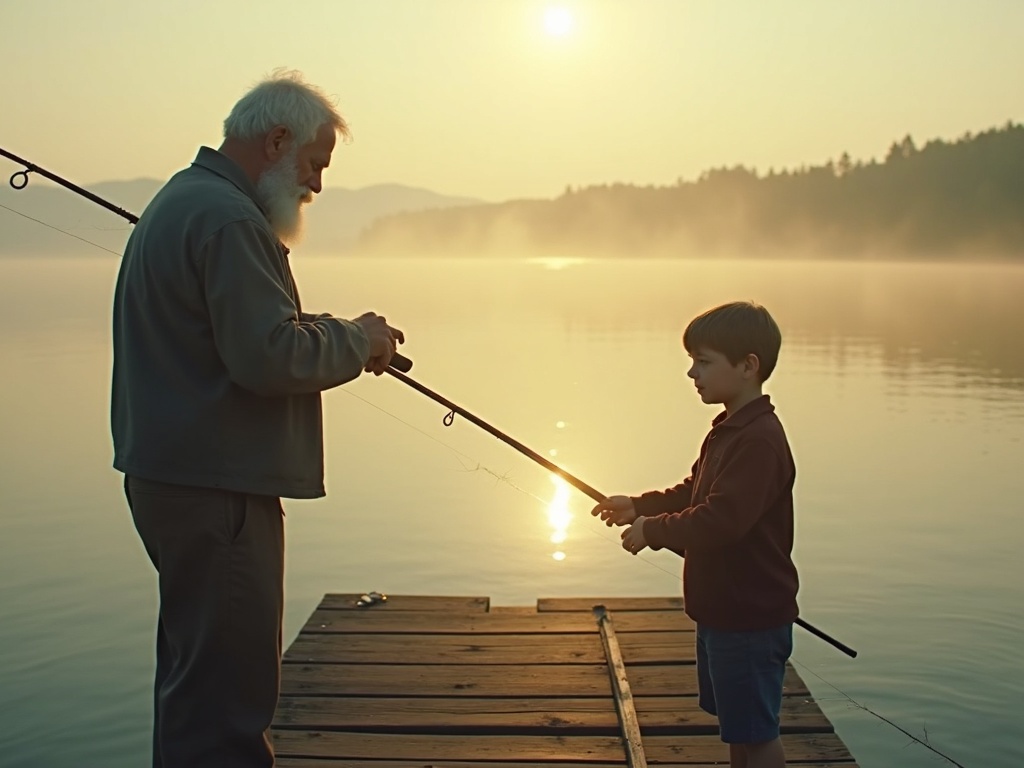
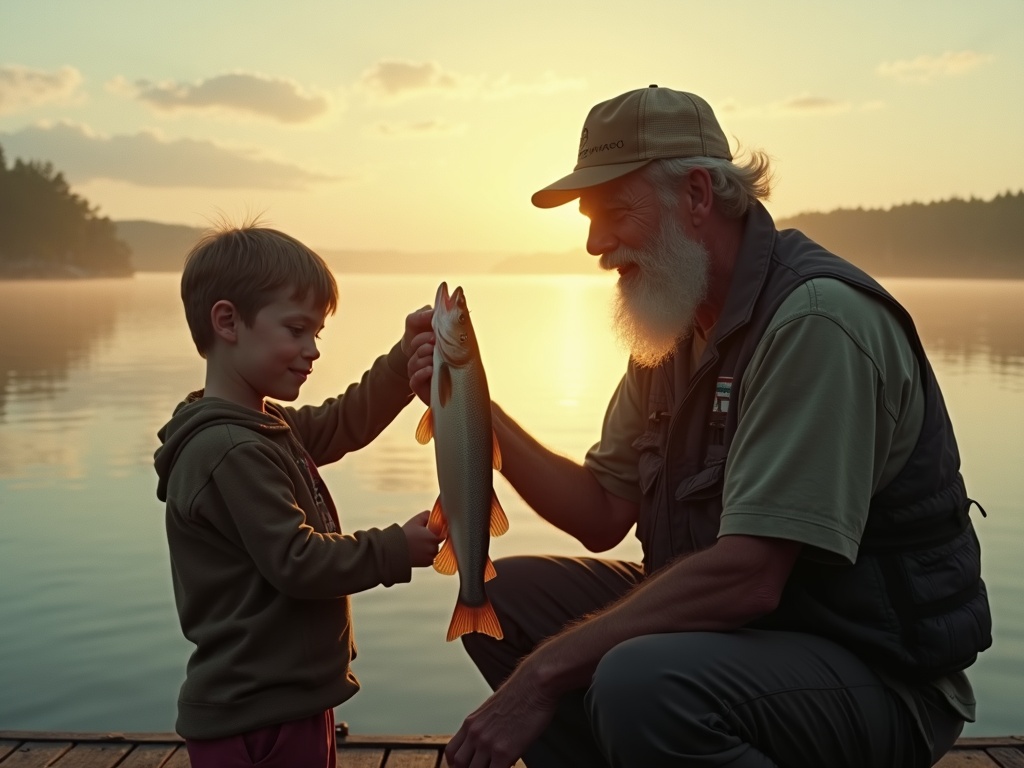
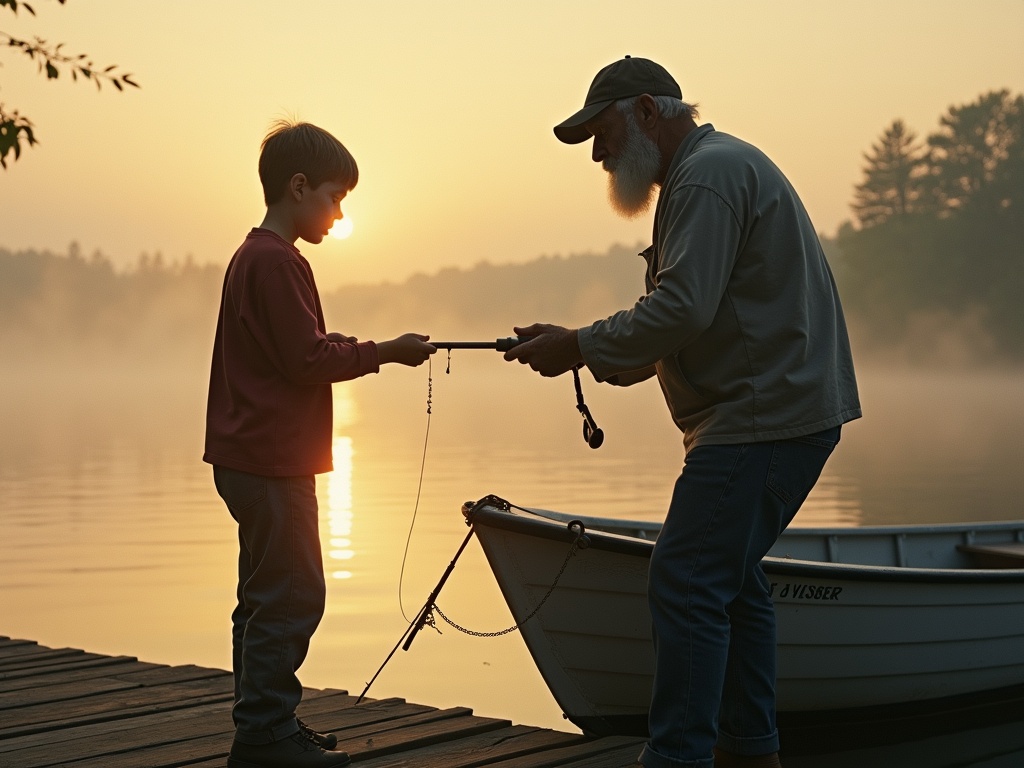
From keyframes to cinematic episodes
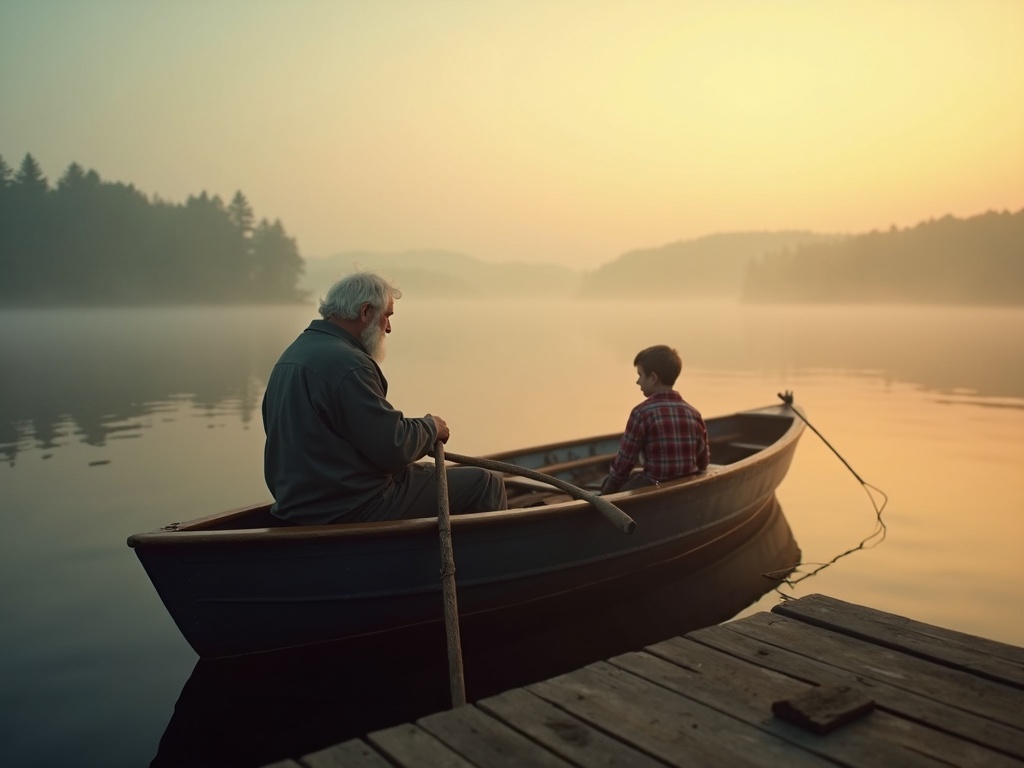
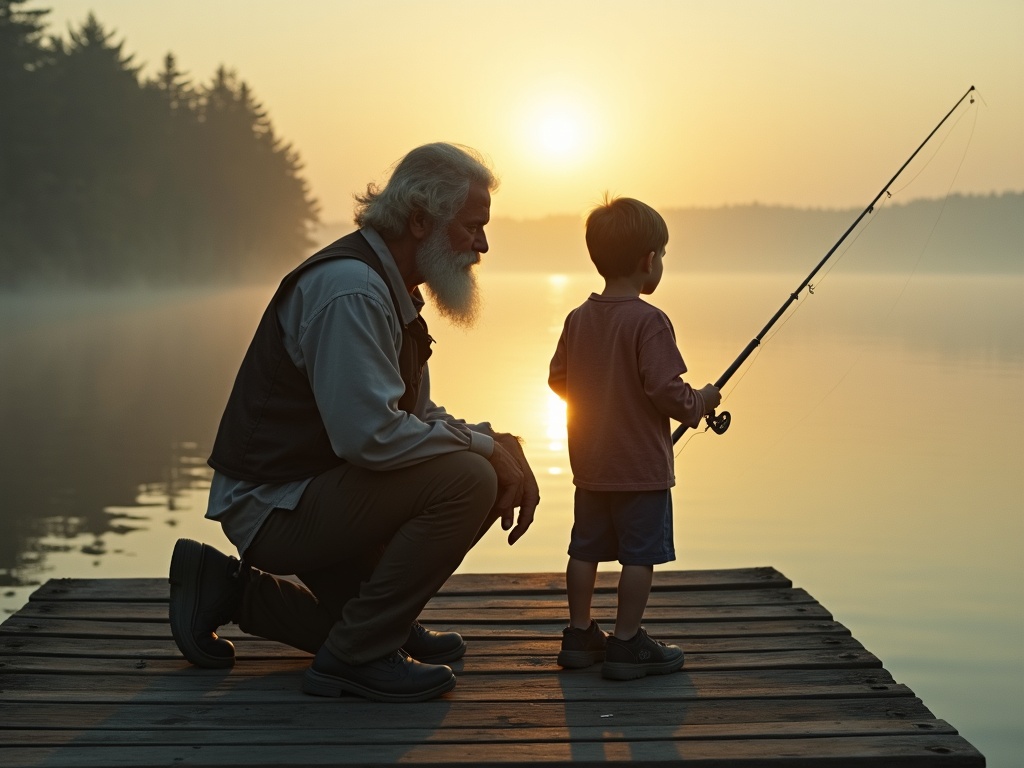
The eight stills are the storyboard — the deliverable a director would have shipped a decade ago. The same MCP surface keeps going. The director's agent picked four key narrative beats (Scene 1 Dawn, Scene 3 Lesson, Scene 6 Catch, Scene 8 Rowing home), passed each scene URL as source_url, and called create_media action=animate model_override=seedance-i2v in parallel. The keyframe is the first frame; seedance generates 5-6s of cinematic motion from it.
Two of the four initial calls failed transiently with a worker abort. The agent saw the typed error, branched on retryable=true, and re-submitted both. Both succeeded on retry — the workflow is robust to fal-side flakes by design (AX-1 error envelope + idempotency-friendly retries).
Total cost for the four episodes: ~$1.10 (seedance-i2v ~$0.25/clip). Total time wall-clock: 195-230s per clip, all in parallel. The director now has a paper edit — eight beats — plus four moving shots they can drop directly into Premiere or DaVinci.
The honest drift trace
This case study doesn't smooth over what happened. The drift gate logged every grading call. The first three scenes scored well (0.87, 0.83, 0.79). Scenes 3 and 4 dipped below the 0.70 threshold and triggered the retry path. The retries pulled scores back to ~0.78 average. Three stable scenes were also captured into a LoRA-training-ready bucket (anchor_hash v1_58a688c6ad8ae48a45cff009) — the substrate for future Z4 auto-LoRA work.
Specific grader observations the system logged:
"The wardrobe for both characters is completely different from the anchor sheet." — drift_check, score 0.28, scene retried
"The older man's wardrobe is inconsistent, wearing a plain top instead of the cable-knit sweater from the anchor." — drift_check, score 0.87, passed threshold
"Neither the man nor the boy are wearing their canonical outfits from the anchor sheet, and the boy's face is obscured." — post-retry, score 0.63, second retry queued
The system surfaces drift not by claiming consistency it doesn't have, but by grading and retrying when the score is below threshold. That's the substantive difference vs prompt-and-pray.
How this compares
| Capability | Storyboard MCP | Runway References / Gen-4 | Midjourney character refs | Sora 2 |
|---|---|---|---|---|
| Auto-extract characters from brief | ✓ Gemini Vision NER | Manual upload | Manual upload + --cref | Manual |
| Auto-generate anchor sheet | ✓ nano-banana, ~13 s | Manual composition | Manual composition | n/a |
| Drift detection per scene | ✓ Vision LLM, 0–1 weighted score | None (style transfer only) | None | None |
| Auto-retry below threshold | ✓ 5-retry budget, anchor-strengthened prompts | Manual re-roll | Manual re-roll | Manual |
| LoRA-training-ready capture | ✓ Stable scene URLs logged for downstream training | Separate Gen-4 training flow | Manual gallery curation | n/a |
| Cost for 8 scenes with auto-anchor | ~$0.40 | ~$1.80 (Gen-4 credits, no anchor) | ~$0.70 (Standard, no drift gate) | ~$2.40 (preview pricing) |
The agent-level affordances Z+AX added
Eight months ago, the same brief would have required the director's agent to:
- Pick a base model.
- Generate eight prompts manually, hand-tuning consistency cues.
- Run eight separate calls.
- Eyeball each result.
- Manually re-roll the ones that didn't match.
- Pay for every retry without server-side budget protection.
What the agent actually did, post Z+AX:
generate_project({ title, scenes, character_anchor: "auto" })— one call.- Polled
get_creative_jobtwice while the worker fanned out scenes + ran the drift gate + queued retries. - Received
viewer_url,anchor_url, and a fullconsistency_logwith every drift score and retry decision.
Three tool calls. Two characters. Eight scenes that mostly look like the same characters. A consistency log the director can audit.
Run the same flow
Submit your own multi-scene brief: mcp__storyboard__generate_project with character_anchor: "auto" when you have 3+ scenes. The pipeline does the rest.
Live: storyboard.daydream.monster/v/proj_3a433187c484 · Anchor sheet: view